
Health insurance is no longer optional. With medical expenses rising steadily, the right coverage can determine how smoothly you handle a health emergency.
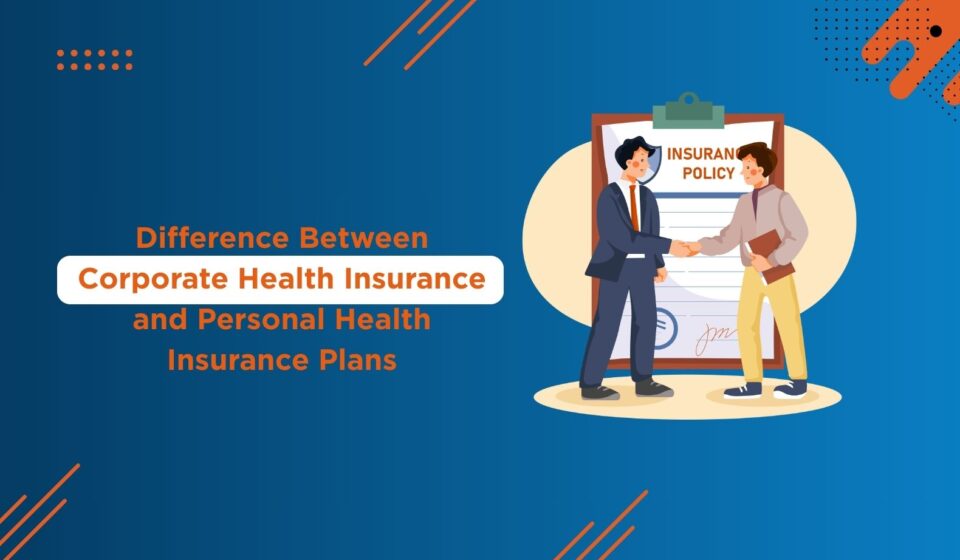
Many people depend only on the health insurance provided by their employer, while others purchase a personal health insurance policy. Both types of insurance serve an important purpose, but they differ significantly in coverage, flexibility, cost, and continuity.
This guide explains how corporate and personal health insurance work, their key differences, and when you should choose each option.
Understanding Corporate Health Insurance
Corporate health insurance is a group health insurance policy provided by an employer to its employees as an employment benefit. The employer purchases the policy, negotiates its terms with the insurance company, and pays the premium either fully or partially.
The main purpose of corporate health insurance is to provide employees with basic medical coverage during their employment. Because the policy covers a large group, insurers may offer it at a comparatively lower premium and with simpler enrolment requirements.
Important features of corporate health insurance include:
- Coverage is connected to your employment.
- The policy usually remains active only while you work for the organisation.
- Coverage may be extended to your spouse, children, or parents, depending on the employer’s policy.
- The employer generally decides the sum insured.
- Policy terms are usually standardised for employees.
- Employees have limited control over benefits and customisation.
Corporate health insurance is convenient and affordable, but it may not fully meet the medical requirements of every employee and family.
Understanding Personal Health Insurance
Personal health insurance is an individual policy purchased directly from an insurance company. It can be selected according to your age, medical history, lifestyle, family requirements, and financial goals.
Unlike corporate insurance, personal health insurance gives you greater control over the coverage. You can select the sum insured, policy features, add-ons, and family members according to your needs.
Important features of personal health insurance include:
- The policy remains active as long as it is renewed and the premium is paid.
- Coverage is not connected to your employment.
- You can choose an appropriate sum insured.
- Coverage may be increased as your medical needs grow.
- Optional benefits such as critical illness, maternity, or hospital cash cover may be available.
- Waiting periods and medical underwriting may apply based on your health history.
Personal health insurance is designed to provide long-term protection. Its value can increase over time as waiting periods are completed and continuous policy history is established.
Key Differences Between Corporate and Personal Health Insurance
Both types of insurance may cover hospitalisation expenses, but they differ in flexibility, cost, continuity, and depth of coverage.
Coverage and Benefits
Corporate health insurance generally provides standard coverage selected by the employer.
Corporate health insurance may include:
- Hospitalisation expenses up to a fixed sum insured
- Daycare medical procedures
- Pre-existing disease coverage from the first day under some group policies
- Coverage for eligible family members
- Room-rent or treatment-related sub-limits
- Limited or no optional add-ons
Personal health insurance may provide:
- Multiple sum-insured options
- Coverage selected according to personal and family requirements
- Benefits such as home healthcare or wellness services under eligible plans
- Pre-existing disease coverage after the applicable waiting period
- Optional riders or add-ons
- Greater flexibility in choosing policy features
Quick Comparison Table
| Aspect | Corporate Health Insurance | Personal Health Insurance |
|---|---|---|
| Coverage limit | Usually fixed by the employer | Selected by the policyholder |
| Customisation | Limited because the employer decides the benefits | Greater flexibility to select coverage and add-ons |
| Premium | Usually paid fully or partially by the employer | Paid by the policyholder |
| Continuity | Usually ends when employment ends | Continues regardless of job changes |
| Eligibility | Available to eligible employees of the organisation | Available to individuals who meet the insurer’s eligibility requirements |
| Pre-existing diseases | May be covered immediately under some policies | Usually covered after the applicable waiting period |
| Tax benefit | Employees generally cannot claim a deduction for premiums paid entirely by the employer | A deduction may be available according to applicable tax laws |
| Control over policy | Employer controls most policy decisions | Policyholder controls the policy selection |
Corporate plans focus on providing standard coverage to employees, while personal plans focus on providing customised and long-term coverage to an individual or family.
Premium and Cost Structure
The premium structure differs significantly between corporate and personal health insurance.
In corporate health insurance:
- The employer pays most or all of the premium.
- Employees may receive coverage at a low or zero direct cost.
- The premium is generally calculated for the entire employee group.
- Employees may need to pay an additional amount to include parents or increase coverage.
- Employees generally cannot claim a personal tax deduction when the entire premium is paid by the employer.
In personal health insurance:
- The policyholder pays the complete premium.
- The premium depends on age, location, medical history, sum insured, and selected benefits.
- Buying a policy at a younger age may help secure a comparatively lower premium.
- Eligible premiums may qualify for deductions under applicable tax laws.
- The policyholder can compare different insurers and coverage options.
Corporate insurance may appear more affordable because the employer pays the premium. However, the lower cost usually comes with limited control over the policy.
Portability and Continuity
Continuity is one of the most important differences between corporate and personal health insurance.
Corporate health insurance:
- Usually ends when you resign, retire, or lose your job.
- May be replaced with a different policy when you join a new employer.
- May create a coverage gap between jobs.
- May not automatically transfer waiting-period benefits to a new employer’s policy.
- Depends on decisions made by the employer.
Personal health insurance:
- Remains active regardless of job changes.
- Allows applicable waiting periods to continue when renewed without interruption.
- Builds a continuous insurance history.
- Can generally be ported to another insurer according to applicable rules.
- Does not depend on an employer’s decisions.
Continuity becomes especially important as you grow older or develop a medical condition. A personal policy ensures that your coverage does not automatically end when your employment changes.
When to Choose Corporate Health Insurance
Corporate health insurance can be useful as an affordable and easily accessible source of medical coverage.
You may find corporate health insurance suitable when:
- You are young and beginning your career.
- You do not have major medical concerns.
- Your employer offers an adequate sum insured.
- Your family’s medical requirements are limited.
- The policy offers immediate coverage for pre-existing conditions.
- You are temporarily unable to purchase a personal policy.
Corporate health insurance should generally be considered an employment benefit and an additional layer of financial protection rather than a permanent solution.
When to Choose Personal Health Insurance
Personal health insurance becomes increasingly important as your responsibilities and healthcare requirements grow.
A personal policy may be suitable when:
- You want stable and long-term coverage.
- You expect to change jobs or become self-employed.
- You have dependent family members.
- You need a higher sum insured.
- Your employer’s policy provides insufficient coverage.
- You want control over policy features and add-ons.
- You want coverage that continues after retirement.
Even when you already have corporate coverage, a personal policy can work as a dependable backup and reduce the possibility of being left uninsured during a job transition.
Should You Have Both Corporate and Personal Health Insurance?
For many people, maintaining both types of health insurance can be a practical approach.
Corporate health insurance can provide immediate and affordable coverage during employment. A personal policy can provide additional coverage, flexibility, and long-term continuity.
Having both policies may help you:
- Increase your total available medical coverage.
- Reduce dependence on your employer.
- Maintain insurance during a job change.
- Continue coverage after retirement.
- Complete personal-policy waiting periods while you are still covered by your employer.
- Protect yourself against changes to the employer’s policy.
The ideal combination depends on your age, family size, medical history, income, and existing coverage.
Conclusion
Corporate and personal health insurance serve different purposes. Corporate health insurance offers convenient and affordable access to basic medical coverage during employment. Personal health insurance provides flexible, independent, and long-term protection that remains with you through different stages of life.
Depending only on corporate insurance may create coverage gaps during job changes, unemployment, or retirement. A personal health insurance policy can fill these gaps and provide greater control over your medical protection.
For many individuals, the most practical approach is to use corporate and personal health insurance together.
Frequently Asked Questions
What Happens to My Corporate Health Insurance When I Leave My Job?
Corporate health insurance generally ends when you leave the organisation. Some insurers may allow conversion to an individual policy within a specified period, subject to policy terms and underwriting requirements.
Can I Customise a Corporate Health Insurance Policy?
Customisation options are generally limited because the employer decides the coverage structure, sum insured, and benefits. Some employers may allow employees to pay an additional premium for enhanced coverage or parental coverage.
Does Personal Health Insurance Cover Pre-Existing Conditions?
Personal health insurance may cover declared pre-existing conditions after the applicable waiting period. Coverage depends on the insurer’s underwriting decision and policy terms.
Which Is More Cost-Effective: Corporate or Personal Health Insurance?
Corporate health insurance is usually more affordable in the short term because the employer pays most or all of the premium. Personal health insurance may provide better long-term value because it offers continuity, flexibility, and independent coverage.
How Do I Choose the Right Personal Health Insurance Policy?
Consider your age, family size, medical history, healthcare costs in your city, and required sum insured. Compare waiting periods, exclusions, co-payment requirements, room-rent limits, network hospitals, and claim procedures before choosing a policy.
Why May Corporate Health Insurance Not Be Enough?
Corporate insurance may have a low sum insured, employer-defined restrictions, treatment-related sub-limits, and limited customisation. It may also end immediately when your employment ends.
Can Corporate Health Insurance Be Converted Into a Personal Policy?
Some insurers permit employees to migrate from a corporate group policy to an individual policy. You may need to apply within a specified period, and the insurer may impose revised premiums, underwriting requirements, or different coverage terms.
Is It Beneficial to Buy Personal Health Insurance While I Have Corporate Coverage?
Yes. Buying personal insurance while you have corporate coverage can help you complete waiting periods, build a continuous policy history, and remain insured during job changes or retirement.